Friday, July 31, 2009

I remember Mama: one evening with the young Michael Jackson

Jackson Family Cover, Ebony Magazine,
December 1974
Sitting in my San Francisco kitchen this week, I stared at the countertop television, gazing at the images of Katherine Jackson, and wondering if we really do resemble one another. Thirty-five years ago, her sons declared that we did. At the time, I didn’t think we looked alike, but I do remember those five shy boys who performed at the Circle Star Theater in San Carlos during the summer of 1974.

The world now knows that Katherine Jackson’s most famous son has just died unexpectedly, leaving his affairs and his children in her hands for safekeeping.
The boys loved their mother dearly, particularly the “special” one, Michael. At the time, I presumed that the boys yearned for her presence, and so they saw her reflection in the faces of other black women they would encounter on the road.

Michael was the first to say, “She looks just like Mama, don’t she?” to his brothers, repeating himself several times. “Don’t she look just like Mama?” He pointed to me while turning his head from side to side, as if to encourage each 
of his brothers to share his vision of a woman exactly like their mother, sitting 
with them backstage at that moment.
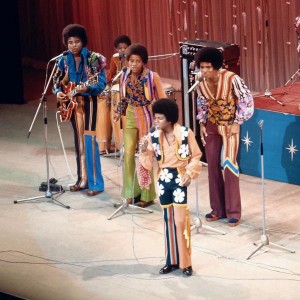
A relative, I think perhaps an uncle of the brothers Jackson, had made it possible for me to snag one of the few television interviews they would grant on this trip. I knew they were shy and were not noted for providing long answers to reporters’ questions, so I stood to benefit if they felt kinship with me and were relaxed during the interview. (view a 1974 network television interview with the Jackson 5 here)  I teased them and replied, “Your mother would probably laugh if she heard you say I looked like her, because she is much prettier than I am.” Then we drifted into the usual reporter questions, to which they listened, more than providing lengthy answers. But I wasn’t concerned about their reticence, because I knew their upbeat and rhythmic music and their precision dancing routines would more than compensate for any missing words in my report.

When we finished the interview, I advised them to be careful whom they compared to their beautiful mother. She just might not agree with them, and they might get in trouble! We all laughed at the thought.
They had just completed an exhausting show, part of a seven-day run at the Circle Star venue, the long runs giving them a break from a previous pattern of one-night stands in cities across the nation and around the world.

I asked, had they had a chance to visit San Francisco? Their answer was, “We sure would like to go in and buy some jeans, but the stores are always closed when we get off.”

I told them if they really wanted to go, I could help. My daughter had just been made assistant manager at Tops and Trousers, a store that specialized in jeans, right across from the Saint Francis Hotel on Union Square. The store was supposed to close at nine, but she always worked late closing the books. I called the store and sure enough, my daughter was still there. I asked if she could call security and get permission to change the alarm and wait for the boys to come in, so they could have a chance to shop for some jeans.

As much as she wanted to, she admitted being worried about calling attention to herself by asking for any special favors. You see, she hadn’t been completely honest about her age when she was hired…but the temptation to meet the Jackson 5 was irresistible, so she made the necessary arrangements to keep the store open late that night.
Later, she called to tell me how nice they had been, that they had arrived in a big limousine and that she was profoundly sorry she hadn’t had a camera on hand. So there are no photos of this special, once-in-a-lifetime encounter, just the memories.

Katherine and Michael Jackson, 2005
So there you have it: one small story about a single encounter with a giant superstar. These days, it’s nice to remember Michael as a child, with all the sweet innocence of youth; a boy who loved his mother and just wanted a new pair of jeans.

Did you see the Jackson 5 during that 1974 run at the Circle Star Theater? Do you have any concert memories or memories of personal contacts with the Jacksons? Please share your stories in the Comments section below.

This article was originally published on sfgate.com on July 3 and in the Huffington Post on July 7, 2009.


Monday, July 27, 2009

The Crimson Shield of Truth

The Harvard University crest takes the form of a crimson shield, surrounded by laurel wreaths, on which are depicted three open books bearing the Latin word, “Veritas“(truth). The design symbolizes a belief that mastery and “truth” can be found through study, research and contemplation, and that educational truth can be a crimson shield for victory in the battle against ignorance.

Last week, two Harvard stars ran smack into the reality that truth can wear more than one face. Both men are exceptional scholars, high achievers and outstanding leaders known for their ability to overcome racial obstacles. They have done so well in achieving the American dream that both expected to be treated in a color-blind, post-racial fashion.
Neither tenured Harvard University professor Henry Louis Gates Jr., nor Harvard Law graduate (and President of the United States) Barack Obama are seeking sympathy because their race has been a hindrance to them. On the contrary, their exceptional abilities and intact egos have allowed both men to compete with the best and brightest in the world. Both men appear to have assumed that the crimson shield of their educational accomplishments could protect them from the ignorance of racial injustice.

But over the past week, each man made a split-second decision to utter a few inopportune remarks—under the full glare of media attention. First, Gates, in an egotistical huff, asked a white police officer a rhetorical question, “You don’t know who you’re messing with, do you?” The answer (a perpetrator of “disorderly conduct”) was not what the good professor expected to hear. Subsequently, President Obama was reminded that using the word “stupid” to describe the actions of a police department might be viewed as inflammatory language, especially when one does not have all the facts at hand. 

Both of these missteps would have meant little except for the issue of race. For a moment both of these men forgot that the power of racial politics is so pervasive and engulfing that Americans are in a constant battle to vanquish it.
Both Prof. Gates and Sgt. Crowley, the arresting officer, believed they were speaking the truth in their version of events. President Obama undoubtedly felt he spoke the truth as well in his evaluation of the incident. But that’s the damnable thing about racial issues. Those who, based on their life experiences, feel that racial discrimination still exists are as confident of their truth as those who feel those issues are all in the past and are therefore irrelevant in 21st century America. In fact, it is profoundly clear that, despite the image of the crimson shield, there exists no singular, capital-T “Truth”, no single “veritas” upon which educated people can agree on the subject of racial justice.

To many African Americans, Professor Gates’ story is as familiar as the ABC’s they learned in childhood. Most black children are taught to be wary of police encounters, because people will make assumptions about them based on their skin color, and they are taught that it is their responsibility to protect themselves from the criminal justice, economic and psychological tolls of racism. 

For a moment, all the media brouhaha about the Gates-Crowley affair punctured the optimistic illusion that the election of an African American president could serve as a sort of magic sword to vanquish centuries of racism and discrimination. 

Many believe that what happened to Prof. Gates was his own responsibility, for speaking inappropriately and unwisely to an officer in the line of duty, while many, many others believe that what happened reflects the evils of our society, the realities of racial profiling and the truth about police abuse of power when dealing with women and racial minorities. Gates has spent his career teaching, lecturing and making television programs to educate the public about African American history. Hopefully, this incident will become a mere footnote to his biography. After all, he was released within hours under his own recognizance, and the disorderly conduct charges were immediately dropped.

President Obama faces a different situation. As if scattered with stones and potholes, the road he travels is full of individuals and organizations that are waiting for him to stumble, fall and lose control of his governance agenda. To succeed, he needs to adroitly step over and around any racial hurdles, as he tries to heal a nation bleeding from the wounds of wars abroad and economic devastation at home. His leadership position demands that he turn the Cambridge police incident into a real, nationwide “teachable moment”, bringing to bear all the weight of his educational career at Columbia and Harvard, and his years as a professor of constitutional law at the University of Chicago.

When, as Attorney General Eric Holder has suggested, America begins the difficult conversation about racism, we will finally be on our way to seeking a unified truth about its status in our society. Then we may come to know the truth, and the truth will help us to guard the democratic rights we hold so dear. And perhaps, the truth will set us free.

Sunday, July 19, 2009

And that's the way it was...

Doggone it! I just know that picture of Walter Cronkite, with his wife Mary Elizabeth (”Betsy”), my husband Bill and me, our arms entwined around one anothers’ shoulders, is somewhere around this house, but I can’t find it anywhere. I value that photo, I treasure it, and yet at this moment when I need it most, I just can’t put my hands on it. And that’s the way it is now with Walter: we valued him, we treasured him, but we will no longer be able to put our hands on him or place our arms around his shoulders. He was more than a man; he was a symbol of the best days of broadcast journalism. 
(Marty Lederhandler / AP)
Walter Cronkite and his wife Betsy, 1981
 
In 1962, he accepted the anchor chair for the CBS Evening News. His show had not yet advanced to the rank of “highest-rated national newscast” when I began my career at CBS’ local affiliate station KPIX in 1967. But Channel Five was by far the most popular evening news program in Northern California during the early years of the Cronkite era. Our local show was the lead-in to the national news and our success handed the network a big audience for Walter’s show each night. 

Over the years, my most intimate encounters with him were all, of course, official business occasions, but these were exciting, nail-biting events for me and the other news anchors. Walter Cronkite inspired many journalists of my generation, of all races and both genders, just as he often inspired this country in ways that brought us all together.
Once a year, “Walter”, as he insisted we call him, visited the large-market stations that carried his national news broadcasts, including San Francisco. How we all wanted to impress him! We worried for days in advance about possible topics of discussion. We tried to formulate clever questions that would make us seem smart when we interviewed him. We knew he liked to ask sharp questions, even in polite conversation, so we crammed our brains with endless details about national and international events. After all, he had been an award-winning foreign correspondent, plus he knew as much about the nation’s space program as the NASA guys did.

I remember always being a little surprised that he actually remembered me from one visit to the next, until one day it occurred to me that, during my early years in television, there had been no other black women anchors in this part of the world. Cronkite closely followed the civil rights movement–he often reported its progress on his nightly broadcast—and, ever the reporter, he always took a moment to inquire how I was faring out in the field.

It wasn’t until 1970 that Cronkite’s “CBS Evening News” finally beat ratings-rival NBC’s Huntley-Brinkley newscast. “Uncle Walter” became the number one source of news in American homes and held that perch until he retired from the chair in 1981. 

At one time, he was described as being “the most trusted man in America”. The New York Times’ Douglas Martin memorialized him as being more an institution than a mere mortal, television newsman, during the height of his career:
From 1962 to 1981, Mr. Cronkite was a nightly presence in American homes and always a reassuring one, guiding viewers through national triumphs and tragedies alike, from moonwalks to war, in an era when network news was central to many people’s lives. He became something of a national institution.
Fast forward: A few years ago, Walter and I met again at a fancy party where he was being honored by the American Federation of Television and Radio Artists at the top of the Waldorf Astoria Hotel in New York City. He and his wife Betsy greeted me and Bill as old friends. We took pictures, including the very photo I can’t put my hands on now. He asked me, where I was working? I told him; we now had something else in common: at that point, we both worked part-time for public broadcasting.

Over the years, there was so much I learned from him, in person and by example, and I have tried to integrate everything he taught me into my understanding of news and the responsibilities of being a journalist. Once, he counseled me that “if you get your facts straight, you will succeed. If you couple that with fairness and as much objectivity as you can muster, you are almost there. If you are honest and interested in the people you talk to and the topics you cover, you will be a big success.”

Those “Cronkite Principles” have served me well. I will always remember his kindness and concern for a “wet-behind-the-ears” female reporter, who was, in those days, very much in need of a kindly guide.
Thanks so much to the man America trusted the most, the man who entered our homes night after night to inform us of “the way it is”. Your image will stay in our minds and in our hearts.

This post originally appeared in the San Francisco Chronicle online edtion, The Gate on July 19, 2009.

Tuesday, July 7, 2009

For clear talk, it’s Barbara Rodgers

For decades, she has been talking to you; now it’s your turn to talk back to her.

Barbara Rodgers, one of the Bay Area’s most talented television reporters and anchors, and a sparkling presence at KPIX (CBS5) for almost 30 years, is launching a career in talk radio. Starting tomorrow, she will bring that same level of excellence to a facet of the electronic media that frankly, could use a big, healthy dose of her class and dignity. 

Barbara Rodgers
 Barbara’s new radio program will launch Saturday afternoon, July 18, airing from noon to two o’clock on KKGN Green 960 AM Radio. She is entering a crowded field of over 100 Bay Area HD and Internet radio stations. But rising above the cacophony of voices, choices and chatter, Barbara Rodgers’ unique character, charm and charisma will attract a discerning audience to discuss the issues of the day.

Barbara says she believes there are listeners who want to hear high-profile guests, from all walks of life, engaging callers in serious, moderated discussions. “This radio program will allow me to actually talk to my listeners and hear their opinions—in real time”.

The radio talk-show hosts we hear most about are the provocateurs: those edgy wall-slammers who spew insults or push the mute button whenever someone with a dissenting opinion dares to infiltrate their call-in lines.

One of the most notorious of these programs originates in the Bay Area. The host of that show is reported to have made an alarming remark on a recent syndicated broadcast. Referring to a group of undocumented college students who had started a hunger strike, hoping to pressure legislators to allow them sanctuary in the US, this host said,
“I would say, let them fast until they starve to death then that solves the problem. Because then we won’t have a problem about giving them green cards because they’re illegal aliens, they don’t belong here to begin with.”
Well, in my opinion, this represents the lowest level of dialogue that talk radio can provide, but we can be sure that “Live from San Francisco, It’s Barbara Rodgers” will offer a viable, high-road alternative. So why has there been so very little promotion of the show? Well, I feel it’s vitally important that the Bay Area support its own, so I want to make sfgate.com readers aware of this newest addition to the diversity of discourse on our radio airwaves.
Years ago, I saw a film about the life of a successful “shock jock” who, when threatened by a listener with a gun, told him: “Man, don’t take this stuff too seriously. I’m just trying to earn a living.” 

But many people do take “this stuff” seriously, that is why it’s good to know that Barbara will be on the air tomorrow and every Saturday. Her new program will focus on current events, some serious issues and some other topics, just for fun. She will certainly need your participation and your phone calls, so call in live and join the conversation!

“Live from San Francisco, It’s Barbara Rodgers” airs Saturdays between noon and two pm on KKGN Green 960 AM Radio. Call-in LIVE: 1-866-960-5753.

This post originally appeared in the San Francisco Chronicle’s online edition The Gate on July 24, 2009.

Monday, July 6, 2009

In these days of economic struggle, the sound of a sax man may soothe our sorrows…
Almost every large and small arts organization is challenged these days to find a way to remain financially afloat.
The old model for non-profit survival is just that—old. The days when a good idea or demonstrated need automatically drew the support of wealthy patrons and foundations, is rapidly eroding in the face of sharp drops in the financial markets. Government grants are being sharply cut as cities, counties and state governments face gigantic deficits, even bankruptcies.

Of course, none of this is news, because we have all been living with financial upheaval for months, but the effects of the recession have now begun to reach even the most senior, established, nonprofit organizations.
The most familiar song of do-gooders is “Who can I turn to?”, when literally everyone seems needy. The answer is simple but difficult to embrace. Now is the time when we must turn to our own creativity and heighten our own passion for the causes to which we have individually committed our support.
Let’s take the example of the nonprofit arts. These days, it is difficult to reach through the tangled trio of life-or-death necessities: hunger, housing and health care, to fight for dollars to fund arts organizations. Yet I believe we must do so, because life without the arts lacks zest and joy.

When we are at the depth of despair, it’s often a film, a concert in the park, a family day at the museum or a sax man’s performance on a downtown street corner that lifts our spirits, helping us to exhale as we take one more step on the heavy-laden paths of our lives…
There is no debate about the priority of basic human services over the arts; in a time of famine, people need to eat. But should people without disposable financial resources be sustained only with food for the body, and never be nourished by food for the soul?

That is where our creativity and passion come into play. First, arts organizations need to realize that we have entered a new day and second, they should not feel ashamed about doing whatever it takes (within reasonable ethical boundaries) to help their organizations to survive. What’s the best way to raise funds in today’s economic environment? Is it raffling a house, auctioning a painting , or hosting a fundraising house party? It’s important for large and small arts organizations to stay alive until the advent of better times. Finally, I believe that passion is the magic ingredient that will keep non-profits both vital and dynamic. Even a small group of true believers can help an organization attain sustainability, especially in these difficult times.

So, I am convinced that it’s time to throw out the old formulas, while maintaining a vigilant lookout for the next hot idea on the horizon, anything that might help to keep our communities rich with goodwill and good works–works of art, that is…

This article was published on sfgate.com on July 6, 2009

Tuesday, June 23, 2009

As a woman who has largely made her living by broadcasting other people’s bad news, I am still surprised at the resilience of the human spirit.
Life’s twists and turns dictate that we all must survive various ups and downs. I don’t know anyone who has not faced some serious challenge in his or her lifetime. And each generation believes that its own era is the most difficult in history, just as I’m sure the current era will prove to be an historically great challenge for all of us living today.

No other cohort in history has simultaneously experienced the risk of both nuclear annihilation and climate change. Even the great depression did not rattle the foundations of our society as much as our present circumstances have done, most certainly because we have all experienced such good lives that we have come to expect the goodness to last forever. Most troubling for me is the possibility that, even as an American, my granddaughter’s future might not be as bright as mine has been. Were it not for our ability to dream and to hope, that possibility could be as depressing as a hard, cold, dusty lump of coal.
Those of us with loved ones and a satisfying career, are truly blessed. Those who have learned to enjoy the beauty of nature and the talents of gifted artists are also very fortunate.

During a life spent in the media, I have been exposed to all facets of the arts. Museums have become special sanctuaries, because they bring so much history and so many rare objects to the public, all for very little cost to visitors.
Shhh! Don’t tell anyone, but at the moment I’m carrying on a virtual love affair with a wonderful painter from somewhere near Santa Cruz, even though he is really an East Coast guy. This is an artist I know only through his work.

There is something about Richard Mayhew’s bright, almost shocking contemporary canvases, in contrast with the meditative calm of his earlier work, that makes me forget the troubles of the world for a few shining moments. The bright spot for me has been the joy of discovering the luminous contemporary work of an artist who has been painting for nearly fifty years. Along the way, he stymied any critic who tried to categorize him. In October, the Museum of the African Diaspora (MoAD) will mount a major retrospective of this illuminating artist’s life’s work.

Mayhew recently donated one of his early oil-on-canvas paintings to MoAD. For the benefit of the museum, the painting will be sold at auction on Wednesday. It is a moody, ecstatic piece called Spring Transition. If you are a fan of Mayhew’s work and would like to support MoAD, contact Katie at the museum (415) 358-7217.
 
Whether you seek calm on the walls of a museum, or escape into concert halls or theatrical stages, it’s good to know that there are places like these to help center your thoughts and emotions. We are truly blessed and very fortunate to live in an area with such a bounty of cultural riches and living artists. So get out there and enjoy!

Richard Mayhew, Spring Transition, collection of the artist

This article was originally published in the San Francisco Chronicle at sfgate.com, June 23, 2009

Friday, June 19, 2009

Sleep on a rock? Such a deal...

Alcatraz Island has been suggested as the City’s newest entry in the adventure tourism market
A sleepover in a former federal prison on a cold and windy island—Now that sounds like fun!
Pride Enterprises
Can’t you see it now…folks lined up at Pier 33 near Fisherman’s Wharf to get fitted for their old-fashioned black-and-white-striped prison suits, handcuffs, and plastic balls-and-chains, to be clamped to one leg. All this, in preparation for their visit to Alcatraz Island in San Francisco Bay. Each guest is told to stand with their backs against a wall, holding their individual prisoner numbers under their chins, as they are photographed before boarding the Alcatraz Adventures ferry for the rough ride to one of the country’s most notorious former prisons.

This is just the beginning of a fun-filled trip to a lonely penitentiary which once housed legendary robbers, crooks and killers such as George “Machine Gun” Kelly, Al Capone and Robert Stroud, alias “The Birdman of Alcatraz”.
Finally, someone has come up with an idea that could help one of our greatest national parks achieve financial sustainability. Of course, I’m talking about the bundle of money the Golden Gate National Recreation Area could make if they market to the fantasy world of adventure tourism. Visits to Alcatraz are at an all-time high, but there are many hours when the park remains empty. Why not utilize those hours to earn more money for capital improvements to the site?

Here’s the deal: a very bright GGNRA staff member has proposed the idea of allowing people (especially those who don’t mind doing a little hard labor) the honor and privilege of spending the night in the Island’s old barracks building, originally constructed in the 1860’s. The barracks were originally designed to be a “bombproof” fortress, to protect the City of San Francisco from Confederate forces and their sympathizers.

The cash-strapped Golden Gate National Recreation Area has been brainstorming for creative ideas to restore the crumbling, historic buildings on the Island of Alcatraz, and now they have found it. Well, at least they have the germ of an idea, one that my husband thinks could earn millions of dollars each year. 

You see, the Park would allow adventurous souls to sleep on the cold and windy island in exchange for a volunteer day of “hard labor”, helping the staff restore the historic buildings and grounds.

That’s fine for the few rugged souls who need a little punishment to encourage them to do community service. But there is another group which genuinely enjoys adventure, which doesn’t care about strenuous vacations and which is accustomed to paying dearly for them. These are the people who finance the adventure travel market around the world.

So, just for fun, let’s continue with this imaginary Alcatraz Adventure trip. We have completed the ferry excursion through choppy Bay waters and we are definitely happy to be back on solid ground—”Rock” solid, that is. Stern-faced penitentiary guards march the tourist “prisoners” into a holding cell. The warden, a no-nonsense man who resembles Clint Eastwood, stands on the railing in the upper tier and spells out the rules. “Welcome to Cellblock A. The guards will now take you to your cells, where you will leave your belongings. Then you will march single-file to the chow hall.”

A few of the guests start to giggle now. Some wonder: What the heck are we doing here? and, as Bay Area tourists are sure to ask, what will we be given to eat? The rest are beginning to doubt whether this trip could possibly be worth the few souvenir snapshots they’ll bring home to remember this special night spent walking in the footsteps of so many famous criminals.
Chow time! So what’s on the menu? Hot dogs and beans lobbed onto a tin plate with a few slices of bread, served with watery coffee. Some folks might begin to relax a bit now, as they imagine how impressed their family and friends will be when they see photos of this infamous jail. After a few minutes of exercise in the prison’s high, walled, fenced-in “yard”, it will soon be time to watch one of the top Alcatraz prison films. Tonight’s selection? “The Rock”, a film that depicts what life was really like on the Island during its days as a federal penitentiary, while imagining modern-day tourists being held hostage by modern-day terrorists. 

After the film, everyone receives “regulation” grey woolen blankets and returns to the cellblock for bed…
During the night, no one sees or hears the Island’s legendary ghost, but with the bright lights, the continual clank of cell doors and the incessant creak of the ever-pacing guards’ boots, it is hard to achieve much more than a few restless hours of sleep on the hard metal bunks. Early the next morning, bells ring to wake everyone for the workday. The day is consumed with painting, digging, gardening, and other maintenance chores to renovate the aging, historic Alcatraz structures. By late afternoon, all “inmates” must turn in their uniforms, check out of their cells and pay their room bills, just as they would in any other tourist hotel. Of course, there would be a stop at the Island’s well-stocked souvenir shop. Then, the emancipated “inmates” would march out of the old prison gates to board the ferry toward “freedom” onshore.

By the time the ferry arrives at the pier to return the last group to safe harbor, and to pick up the next crew of prisoner/visitors en route to the Island, the chatter has reached a fever pitch. Everyone on board talks excitedly about their great, communal adventure. The patrons are happy, the city has benefited by collecting an entertainment tax, and above all, the National Park Service has actively engaged its supporters, educated them, and recruited a new army of volunteers. 

Incidentally, all former “prisoners” are allowed to keep their plastic handcuffs and their balls-and-chains as souvenirs. For many people, the world-famous Fairmont Hotel on tony Nob Hill, which charges the same rate for a one-night stay, wouldn’t have provided half as much fun as this once-in-a-lifetime opportunity to sleep on “The Rock”! Such a deal…

Stock Xchange
“My folks spent the night on The Rock, and all I got was this old ball-and-chain”

This article originally appeared in the San Francisco Chronicle online edition, The Gate on July 24, 2009.